The New York Japanese American Committee for Japan Relief, Inc. worked with the Licensed Agencies for Relief in Asia, known as LARA, to provide food, clothing, medicine, and other essential supplies to people facing severe hardship in Japan after World War II.
The committee grew from a relief-planning group formed by members of New York’s Japanese and Japanese American community in September 1945. Because many first-generation Japanese immigrants were still classified as enemy nationals, the group initially faced government restrictions on sending money and supplies to Japan. After receiving authorization in mid-1946, it formally organized as the New York Japanese American Committee for Japan Relief and became one of the local agencies permitted to cooperate with LARA. Assistance was coordinated through the American Friends Service Committee in Philadelphia.
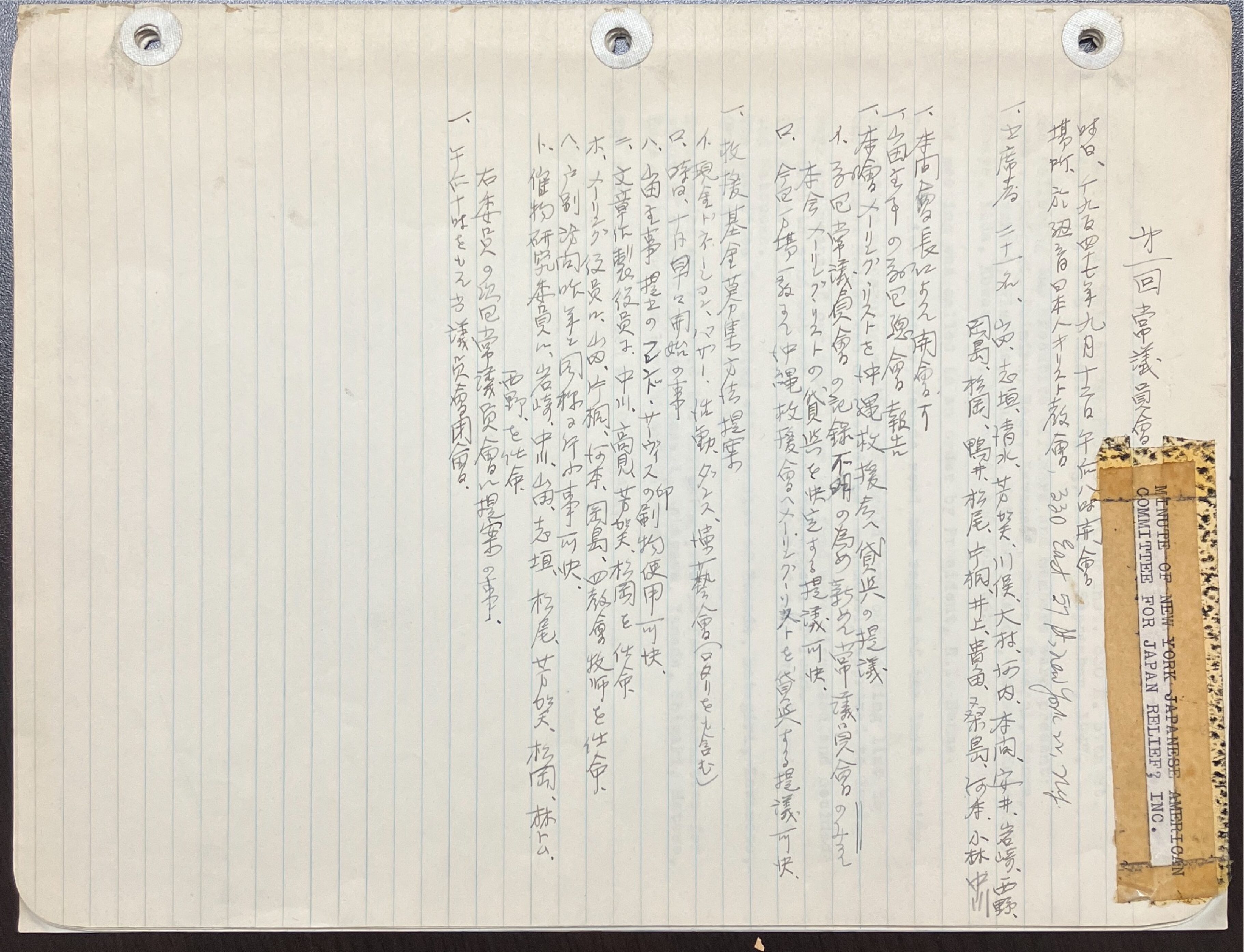
The committee was a collective community undertaking rather than the creation of a single founder. Principal members of its predecessor organization included Hachiro Yuasa, chair; Saburo Akamatsu, vice chair; and Toru Matsumoto, secretary. Other early members included Takeshi Hohga, Giichi Kawamata, Seiichi Konokawa, Tsugio Okada, Soujiro Shimizu, Sannosuke Yamaguchi, and Kanji Yasui.
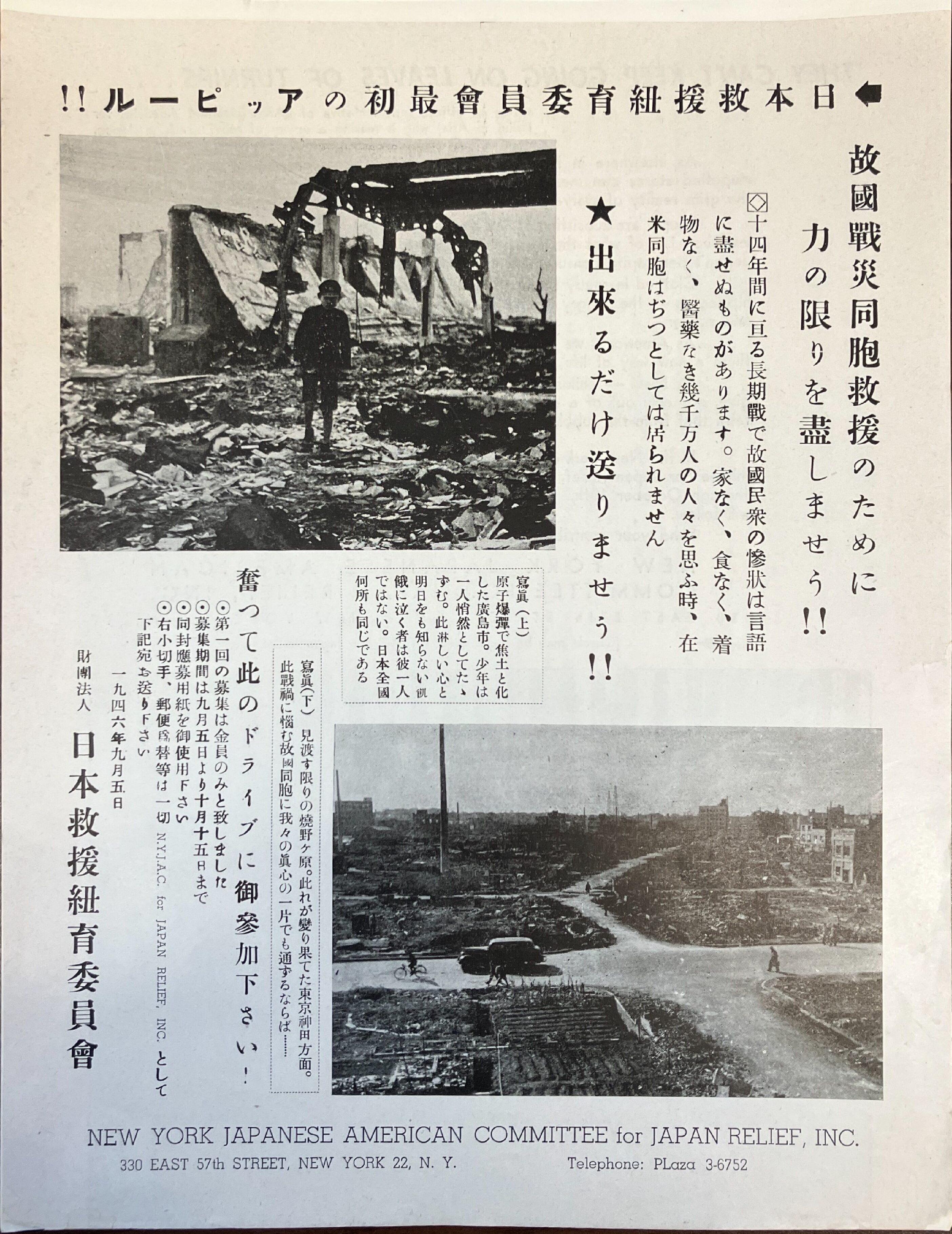
Through fundraising campaigns, public appeals, benefit events, and community outreach, the committee encouraged Japanese and Japanese American residents of New York to contribute money and relief goods. It collected and helped send food, textiles, clothing, and other necessities to Japan. The committee also published materials such as the 1947 pamphlet Of Milk and Eggs, which appealed to the public for support.
LARA had been established in April 1946 as an umbrella organization coordinating the relief work of North American charitable and religious agencies. From November 1946 through June 1952, it distributed approximately 33 million pounds of food, clothing, shoes, cotton, soap, medicine, and other supplies in Japan. Relief was distributed without charge through Japanese welfare organizations according to need. Approximately 20 percent of the supplies came from Japanese nationals and people of Japanese descent in North and South America, including New York’s Japanese American community.
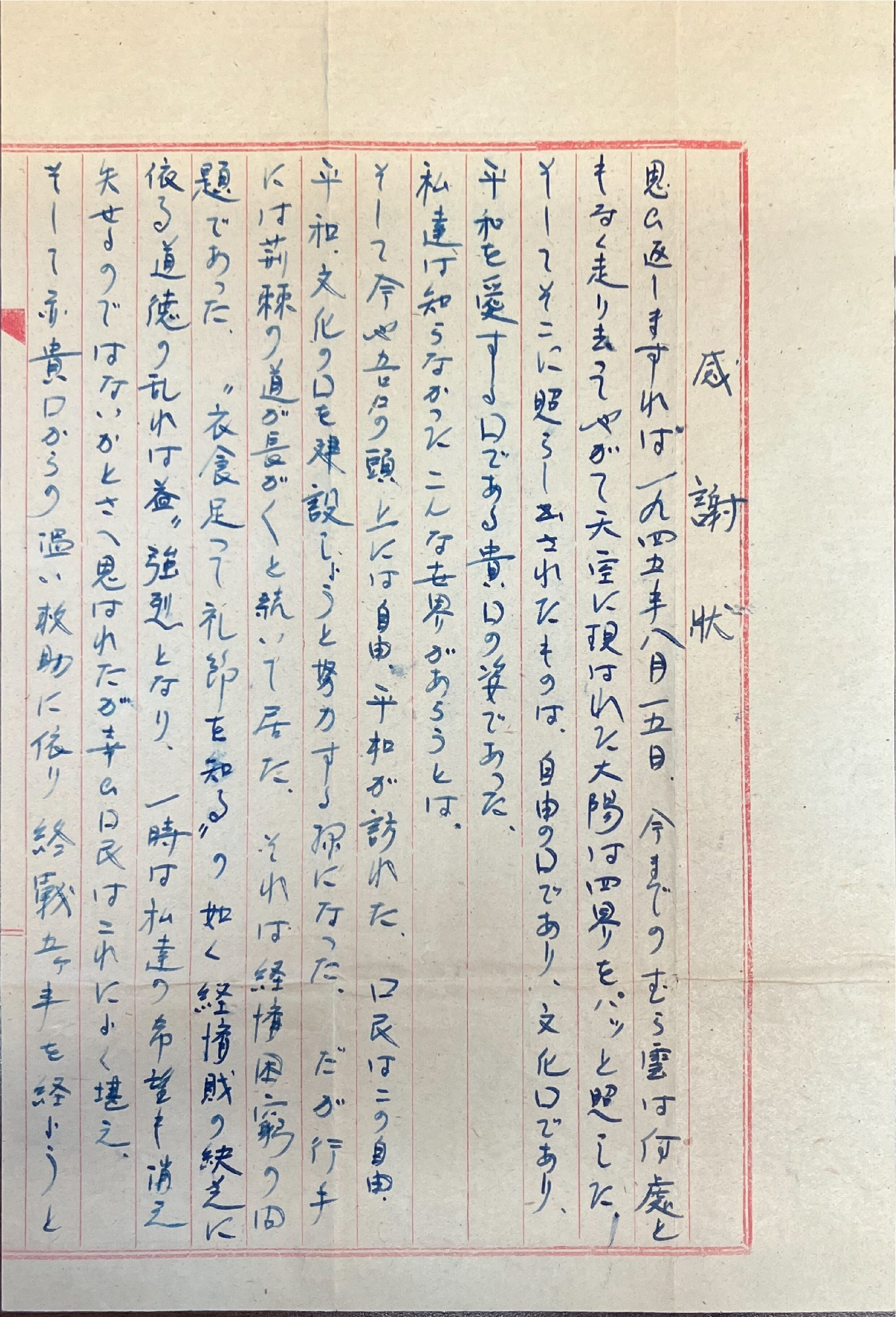
The records preserved in this collection document both the committee’s organization in New York and the effects of its relief work in Japan. They include the committee’s 1947 meeting minutes, fundraising materials, donation correspondence, photographs, and heartfelt letters of appreciation from individuals and institutions that received the supplies. Together, these materials reveal how New York’s Japanese and Japanese American community reestablished connections across the Pacific and participated in Japan’s postwar recovery.